


I remember sitting at a house party in some dingy field way back in 2012, when my mate — half-cut on vodka and high as a kite — confidently told me that World of Warcraft would soon be dead and, within a year or two, we’d all be playing Star Citizen.
That was fourteen years ago.
In that time, we’ve seen a flip in the world order, with a reality TV star and a journalist rising to lead two of the world’s nuclear powers. We’ve lived through a whole-ass pandemic that shut down much of the world. We survived the seemingly endless swathe of celebrity deaths in 2016. GTA V is finally about to give way to GTA VI. Bethesda has probably released Skyrim another hundred times. And we’ve somehow managed to burn through two different DC movie universes.
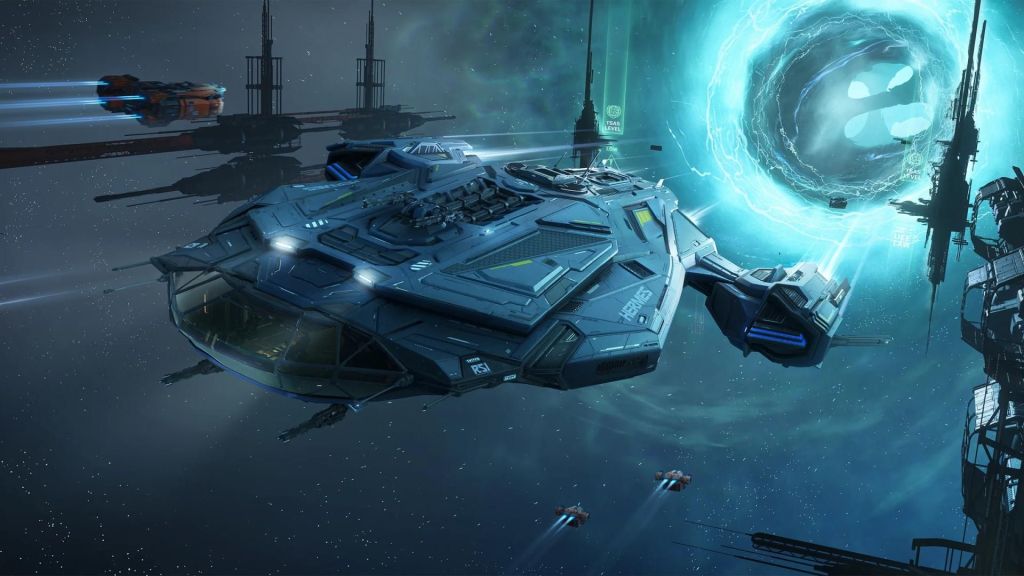
And still, Star Citizen has yet to properly come out.
So why am I talking about an unreleased game?
Well, folks, the weird thing is that Star Citizen is playable. Parts of this enormous project have been available to players for years.
And things aren’t exactly going smoothly.
What the Hell Is Star Citizen?
Way back in 2011, many months before that fateful drunken conversation in a field, Chris Roberts — creator of the iconic Wing Commander series — began work on one of the most ambitious games ever conceived: Star Citizen.
And, honestly, the idea made sense.
MMOs were a huge deal at the time, and Roberts wanted to take the concept to another level. Rather than simply creating another online RPG, Star Citizen would attempt to build an enormous science-fiction universe in which players could actually live out their spacefaring fantasies.
It combines elements of space simulation, first-person shooters and massively multiplayer games, with different modes providing very different experiences.
The Hangar Module originally allowed players to explore and inspect their purchased ships. Arena Commander provided an in-universe combat simulator where players could dogfight against other players or AI. Star Marine brought first-person shooting into the equation.
Then there’s the Persistent Universe: the enormous online sandbox intended to bring everything together.
You can fly ships, walk around stations and cities, transport cargo, fight other players, take missions, mine, salvage, explore planets and generally attempt to make a life for yourself among the stars.
Combine that with multiple star systems for players to travel between and you have one of the most ambitious — and potentially brilliant — ideas for a game ever conceived.
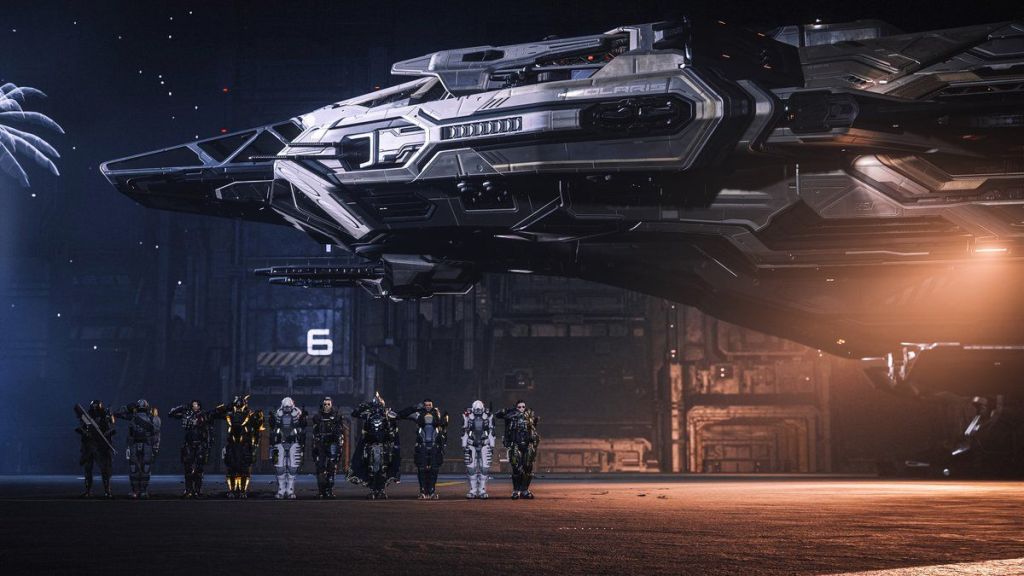
After a hugely successful crowdfunding campaign raised millions of dollars, you might expect the story to end with Star Citizen becoming one of gaming’s greatest success stories.
Oh boy.
It hasn’t quite worked out that way.
Would You Like to Buy a Spaceship?
The playable alpha has helped Cloud Imperium Games continue funding development, with players able to pledge for ships using real money.
And some of those ships are expensive.
We’re not talking about a £20 skin or a £50 expansion here. Over the years, individual ship packages and limited offerings have reached into the thousands of dollars, while enormous bundles aimed at the most dedicated backers have cost tens of thousands.
Yes.
Real money.
For digital spaceships.
In a game that still hasn’t reached its full 1.0 release.
Now, before the angry mob comes after me with pitchforks shaped like spaceships, plenty of people who have spent money on Star Citizen genuinely enjoy it. If you’ve played for hundreds of hours, made friends and had incredible experiences, you might reasonably believe you’ve already received your money’s worth.
But psychologically, Star Citizen also creates some fascinating conditions for something called the sunk cost fallacy.
The Sunk Cost Fallacy
A sunk cost is something you’ve already invested that you can’t recover: money, time, effort or even emotional energy.
The sunk cost fallacy happens when that previous investment influences our decision to continue, even when walking away might make more sense.
Imagine you’ve spent £500 supporting a game.
You’ve waited ten years.
You’ve followed every development update. You’ve joined communities around it. You’ve bought ships. You’ve defended the project when your friends laughed at you.
Then another ship appears.
What’s another £50?
After all, you’re not going to give up now, are you?
There’s a related psychological phenomenon called escalation of commitment. Rather than abandoning something that isn’t producing the result we hoped for, we invest even more resources into it.
That doesn’t mean every Star Citizen player is trapped by sunk-cost thinking. Far from it. Plenty simply enjoy what’s already there.
But fourteen years of development, expensive purchases and an intensely committed community create a fascinating environment in which sunk costs can become extremely powerful.
And despite all that time and money, players still report wildly different experiences with the game.
One Reddit user described it like this:
“When it’s working, and you actually understand how to navigate the universe and the UI, it’s incredibly immersive and awesome of a game. It’s just like the flimsiest and most fragile game ever tho.”
That might be one of the most Star Citizen descriptions imaginable.
When everything works, there’s apparently nothing else quite like it.
The problem is those first four words:
When it’s working.
Another Reddit user was somewhat less charitable:
“Every year for the last 10 years I install this in the hopes it doesn’t run like a smelly turd and every year for the last 10 years it runs like a smelly turd and I instantly uninstall. Is it still the case this year?”
Poetry.
Absolute poetry.
And Then Came the Livestream

So why am I talking about Star Citizen now?
Because Cloud Imperium recently livestreamed the game.
And lads, ladies and everyone else…
It was like a shower of turds.
This wasn’t someone attempting to run Star Citizen on a ten-year-old laptop they’d found underneath their mum’s sofa. The developers were demonstrating an advanced build of their own game on an internal environment.
You would expect this to be where Star Citizen shines.
It did not.
The demonstration suffered from glitches, bugs and failures, and watching the developers attempt to work around them became increasingly uncomfortable.
I am a moron and even I know this is the situation where you desperately want everything to work.
You’re demonstrating your game publicly. You’re using your own setup. You’ve got people who understand the game playing it.
This should be the victory lap.
Instead, things kept going wrong.
YouTuber MoistCr1TiKaL, reacting to the stream, described the atmosphere rather brutally:
“It feels like everybody at the company hates each other.”
He pointed towards team-killing and what he interpreted as increasingly passive-aggressive energy between members of the development team.
Obviously, we can’t actually know what the relationships between those developers are based on one livestream.
And, frankly, I have some sympathy for them.
I’ve given presentations where something has gone wrong. When you’re standing in front of people and the technology decides that today is the day it wants to destroy your life, your stress levels shoot through the roof.
If it happens multiple times, you’re probably not going to be your best self.
But that’s exactly why the stream was so difficult to watch.
Whatever was happening behind the scenes, the people demonstrating Star Citizen increasingly looked like they weren’t having a particularly good time.
I don’t think the developers enjoyed it.
I don’t think the fans enjoyed it.
Okay, maybe Reddit enjoyed it.
But Redditors are a dark and brutal breed.
Is Star Citizen Dead?
And this brings us to the billion-dollar question.
Literally.
By May 2026, Star Citizen’s public crowdfunding total had passed an astonishing $1 billion.
One.
Billion.
Dollars.
And the game still hasn’t reached its full release.
That’s what makes Star Citizen so fascinating to me.
Because calling it a scam is far too simplistic. There is a game here. People play it. Some people absolutely adore it. Cloud Imperium employs developers who have spent years building technology, ships, planets, cities and systems on a scale that few other studios would even attempt.
But calling it an unquestionable success feels equally difficult.
Fourteen years.
More than a billion dollars from the community.
And we’re still waiting for Star Citizen to become the game it has promised to be.
Which leaves me with a much more interesting question than whether Star Citizen is dead.
Can Star Citizen actually afford to fail?
Because after fourteen years, the community hasn’t simply invested money into this project.
People have invested thousands of hours.
They’ve built friendships around it.
They’ve bought ships.
They’ve joined organisations.
They’ve followed development for significant portions of their adult lives.
And some have spent thousands — even tens of thousands — of dollars buying into the dream of what Star Citizen could eventually become.
Walking away from something like that isn’t necessarily as simple as uninstalling a bad game.
Because eventually you’re not just abandoning the game.
You’re abandoning everything you’ve invested into the belief that, one day, Star Citizen will finally become what you were promised.
And somewhere out there, my mate from that field in 2012 is probably still waiting.
At least World of Warcraft should be dead any day now.
Categories: Culture, Gaming, Nerd Bites


