


Growing up in the 90s and 00s, I can easily recall the infamous anti-piracy advert telling us that we wouldn’t steal a car, wouldn’t steal a handbag and wouldn’t steal a television. All of this was supposed to remind us that illegally downloading music was stealing.
It was supposed to be an effective deterrent, but in the end it became a bit of a joke — especially among edgy teenagers who probably downloaded the advert along with the film.
Nevertheless, piracy is considered a crime.
Leaving aside the philosophical rabbit hole of what even defines a crime, maybe I’m trying to channel Plato and wondering whether we have an obligation to obey laws simply because they’re laws. Or maybe I’m just wondering whether downloading something is always as harmful as we’ve been told, especially when research has suggested that people who pirate media can also be some of the biggest consumers of it. (Check the study out here)
But what if I told you that something resembling piracy may also have helped preserve countless pieces of art?
Ye Olde Piracy
In ye olden days, theatre companies could be fiercely defensive of their work.
And why shouldn’t they be?
A successful play was valuable intellectual property long before anyone was arguing about torrents or dodgy streaming boxes. Rival companies wanted successful plays of their own, and unauthorised versions of popular works could find their way into circulation.
Some plays appeared in print without the approval of their authors or theatrical companies. How exactly these texts were created remains debated. One long-standing theory suggested that actors, spectators or others reconstructed plays from memory. Other explanations include shortened performance versions, early drafts or adaptations.
Whatever their origins, the results could sometimes resemble a Frankenstein’s monster of a play — less Romeo and Juliet and more Romero & Julie.
The most famous examples are Shakespeare’s so-called “bad quartos.”
Some early printed editions of plays such as Hamlet, Romeo and Juliet and Henry V differ substantially from later, more authoritative versions. One theory is that at least some were reconstructed from memory and printed without the theatre company’s permission, although modern scholars have increasingly questioned whether “piracy” explains all of these differences.
My favourite example comes from the 1603 edition of Hamlet.
You know the immortal line:
“To be, or not to be…”
Well, this version gives us:
“To be, or not to be, I there’s the point.”
Not quite as catchy.
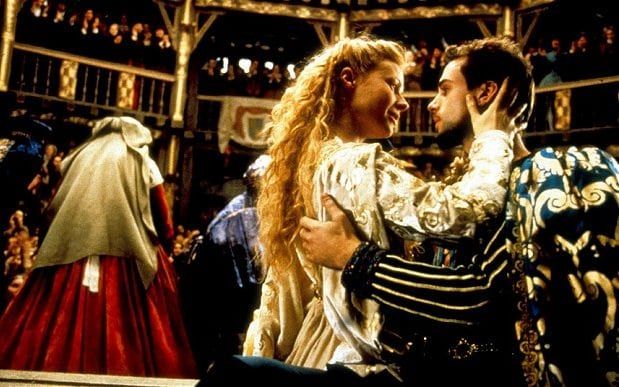
Yet these strange, unauthorised and sometimes mangled editions have become historically valuable. Even when a better version of the same play survives, they can preserve alternative versions of scenes, dialogue and performances that might otherwise have vanished.
There is something wonderfully ironic about that.
Something created without the permission of the original rights holders can, centuries later, become part of how we preserve and understand their art.
From Shakespeare to Shaggy
And that brings us back to the modern world.
Piracy has repeatedly played a complicated role in spreading culture.
Just look at anime.
For decades, fansubs and illegal distribution allowed people outside Japan to experience shows they otherwise had little or no legal means of accessing. Even Crunchyroll began life as a website where users uploaded copyrighted anime without permission, before transforming itself into a legitimate streaming platform and eventually becoming one of the biggest names in international anime distribution.
Or, for a completely different example, look at Shaggy’s It Wasn’t Me.
The song wasn’t originally expected to become the monster hit we remember today. According to Shaggy, an MP3 of the track spread online through Napster before a Hawaiian DJ downloaded it and began playing it on the radio. Its popularity exploded, helping turn the song into a worldwide hit. Check out Vice’s documentary on it, the story is nuts.
So piracy didn’t destroy these works. In some cases, unauthorised copying preserved, distributed or popularised them.
That doesn’t mean piracy is harmless. Creators deserve to be compensated for their work, and widespread piracy absolutely can deprive artists and businesses of revenue.
But the piracy issue is far more nuanced than the world would have us believe. A pirated copy can deprive someone of a sale.
But it can also introduce someone to an artist they support for the next twenty years.
An unauthorised upload can violate someone’s copyright. But it can also preserve something after the official version disappears. A great modern example of this is home recordings of Dr Who saved lost episodes, because the BBC used to just scrap the originals.
And an illegal MP3 can apparently help turn Shaggy into an international superstar, that he was always meant to be.
Maybe the question shouldn’t simply be:
“Is piracy stealing?”
Maybe we should also be asking:
“What happens to culture when nobody tries to save it, even if it is just for themselves?”
Categories: Nerd Bites


