

In 2002, I went on my first ever date. Through a spectacular lack of decision-making, we somehow ended up going to see Ali G Indahouse. At this point, I wasn’t familiar with Sacha Baron Cohen, Ali G, or really any of his characters. But teenage me walked out of that cinema absolutely hooked. I quickly dove into Baron Cohen’s back catalogue, developing a particular fondness for his interview with Northern Irish politician Sammy Wilson.
Now, Sammy and I have very different views on the world. So watching Baron Cohen play the useful idiot, asking seemingly stupid questions while allowing Wilson to walk merrily into the joke, was absolutely spectacular. And Baron Cohen would make an entire career out of doing this.
Perhaps one of the most extraordinary examples came years later with American politician Jason Spencer on Who Is America?
Disguised as an Israeli anti-terrorism expert, Baron Cohen convinced the Georgia politician to participate in increasingly ridiculous “training”, culminating in Spencer exposing himself and repeatedly yelling a racial slur. The fallout eventually contributed to Spencer’s resignation. That’s Baron Cohen’s particular brand of satire operating at its absolute best.
He creates an idiot.
Someone powerful looks at that idiot and thinks:
“I can say what I really think around this guy.”
And then Baron Cohen gives them enough rope to hang themselves.
But there has always been another side to his comedy.
Because Sacha Baron Cohen doesn’t exclusively punch upwards. In Who is Americat, he convinced ordinary Americans that their town could become home to an enormous mosque. He humiliated an entire Romanian village while presenting it as Borat’s home in Kazakhstan.
The difference has always interested me. When Baron Cohen punches upwards, his target tends to have a name and a face.
A politician.
A celebrity.
A billionaire.
Cough… a certain former New York mayor… cough.
When he punches down, however, the target often becomes a crowd.
A town.
A culture.
An archetype.
And that makes the morality of the joke much more complicated.
Which brings us back to Ali G.
Because, dear scholars, there is a reason I’ve spent all this time prattling on about Sacha Baron Cohen.
Ali G is back.
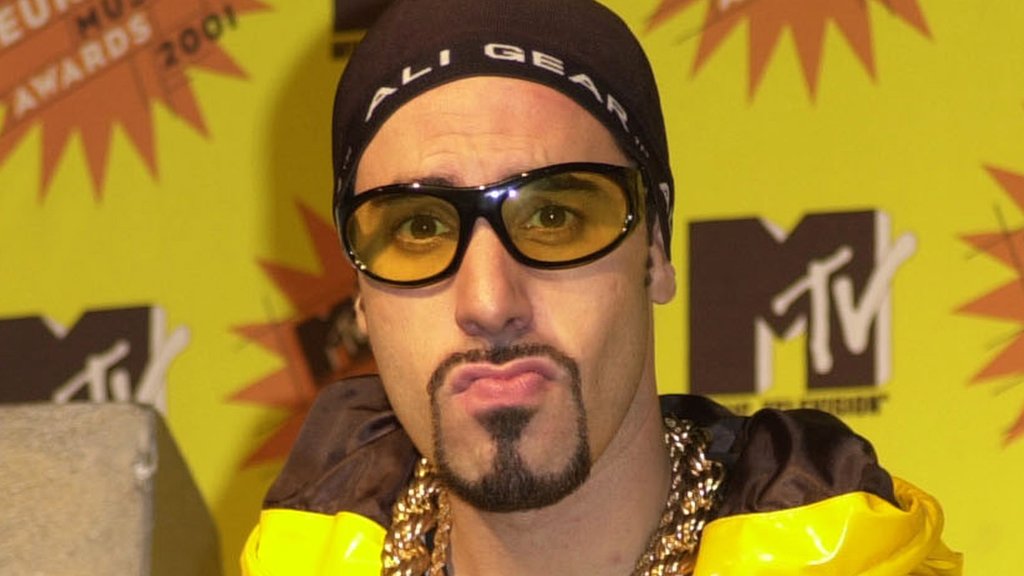
Twenty-four years after Ali G Indahouse, Baron Cohen is returning to Staines’ most infamous resident in Ali G: Who Iz I?
And I have one enormous question.
Does Ali G Still Work in 2026?
Ali G has always been an interesting character because there are at least two ways of interpreting the joke. Baron Cohen has described Ali as a parody of privileged suburban white kids adopting what they perceive to be Black culture. That’s certainly how I understood the character growing up.
Ali wasn’t supposed to be Black. He was an idiot from Staines desperately trying to convince everyone that he was a gangster. The joke was Ali. Except satire has an annoying habit of escaping its creator. Because if your parody of a white man imitating Black culture relies upon exaggerated stereotypes of Black culture…
Who is actually being mocked?
That’s a much harder question. And audiences in 2026 are considerably more willing to ask it than audiences were in 2002. That doesn’t necessarily mean Ali G cannot work anymore. In fact, I think there’s an argument that the character could be more relevant today. Cultural appropriation hasn’t disappeared.
Young men constructing ridiculous identities for themselves certainly haven’t disappeared.
And social media has created an entire economy around people pretending to be richer, tougher, smarter and more successful than they actually are. Ali G was performing an identity before Instagram and TikTok turned performing your identity into an industry. There’s potentially something incredibly interesting there. But Baron Cohen has another problem.
The world knows who Sacha Baron Cohen is now.
The original magic trick depended upon someone sitting opposite Ali G and thinking:
“This man is an idiot.”
Twenty-five years later, politicians know that the idiot asking the ridiculous question might actually be one of the most famous satirists on Earth. So perhaps the biggest challenge facing Who Iz I? isn’t political correctness.
It isn’t cancel culture.
It isn’t even whether Ali G himself has aged badly.
It’s whether Sacha Baron Cohen can still perform the trick. Because Ali G was never funniest when he was simply saying outrageous things. He was funniest when somebody important underestimated him. The idiot wasn’t really the idiot. And occasionally, while we were laughing at Ali G, the person sitting opposite him revealed something considerably uglier.
That’s why, despite my reservations, I’m fascinated to see him return. After all, modern influencer culture arguably has a lot to thank characters like Ali G and Borat for. These were characters that blurred the line between fiction and reality long before YouTube, TikTok or the modern influencer was ever a thing.
Baron Cohen created characters who stepped out of scripted comedy and interacted with the real world, leaving the people around them — and sometimes the audience — unsure where the character ended and the real person began.
And isn’t that strangely familiar?
We now live in a world populated by influencers who construct exaggerated versions of themselves for an audience. Personalities become brands. Private lives become content. Controversy becomes engagement. And sometimes it becomes incredibly difficult to tell where the person ends and the performance begins.
Ali G was doing something remarkably similar before we had a name for it.
Perhaps that’s the greatest irony surrounding his return.
A character that feels like such a product of the late 1990s and early 2000s might actually have something to say about 2026.
I’m not convinced Ali G will work in 2026.
But I’m also not convinced we’ve moved beyond Ali G.
Maybe the world simply caught up with him.
And if anyone can convince me that he still works…
Well…
Booyakasha.
Categories: Films, Nerd Bites


