

For some videos over on our partner YouTube channel, I had the pleasure of researching a certain fictional cult, and it got me thinking: what are my favourite cults in fiction?
So, naturally, why not turn that thought into a Top Ten list?
But first, RULES!!!
- Only one cult per franchise. Otherwise, certain universes could probably fill half this list by themselves.
- These are my personal choices. This isn’t an objective ranking, so please direct all angry correspondence to someone who cares.
- There will be bonus mentions. Because ten simply isn’t enough.
- I’m going to be VERY liberal with the word “cult”. Secret societies, religious fanatics, sinister organisations, groups of dark magic users… if it feels cultish enough, I’m counting it.
With that said, the rules are established, the inevitable arguments are ready to begin, and I’ve probably already annoyed someone…
Let’s get into it.
#10 – The Church of Blood – DC Comics
With DC Comics, I had quite a few choices.
The League of Assassins immediately came to mind, but for reasons you’ll probably pick up on later in this list, I decided to leave them aside.
Then Gotham alone gave me three fantastic options: the Court of Owls, the cult from Batman: The Cult, and the Order of St. Dumas.
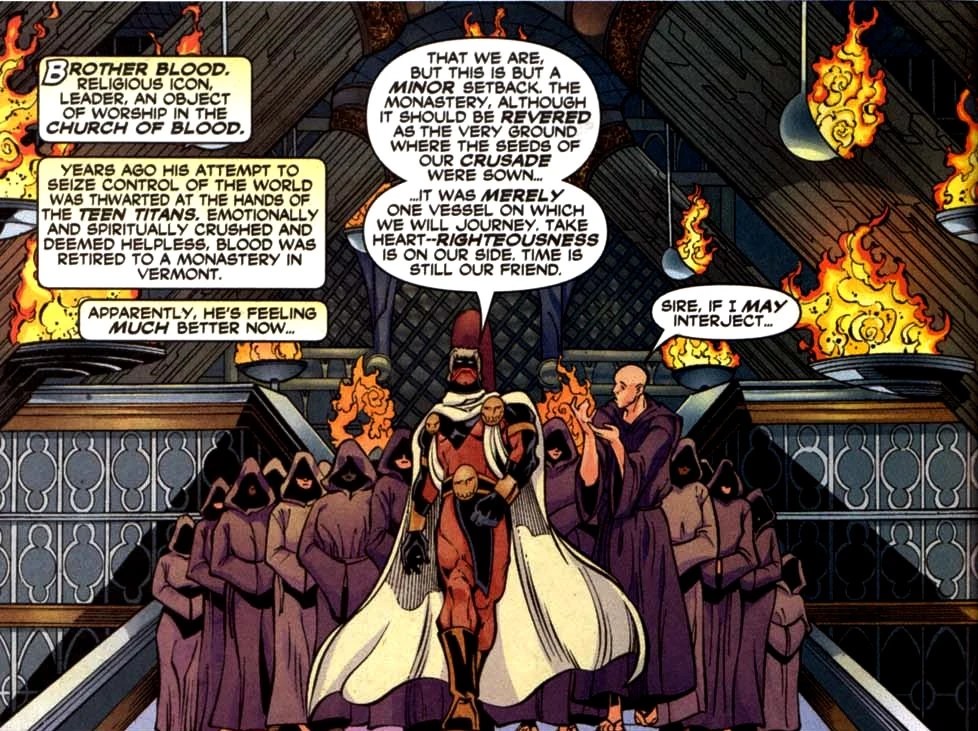
The Church of Blood is a violent international cult that has been operating for centuries under the leadership of a succession of figures who all take the name Brother Blood.
Despite all the blood, murder and ominous naming conventions, the Church worked hard to maintain an image of benevolence. Because apparently calling your organisation the Church of Blood doesn’t immediately scream “WE ARE THE BAD GUYS!”
Naturally, their activities eventually brought them into conflict with the Teen Titans, who exposed the much darker reality behind the organisation.
But to understand the Church, we need to go all the way back to 1202 and the fictional European country of Zandia.
During the Fourth Crusade, Christian knights attacked Zandia, pillaging the country and massacring its people. An unnamed priest eventually led the Zandians in fighting back against the Crusaders and successfully drove them from the country.
And then things got weird.
Shortly afterwards, the priest ordered a pit beneath his church to be filled with the blood of the slain Crusaders.
A year later, he bathed in it.
Because apparently medieval skincare routines were fucking wild.
The priest claimed that bathing in the blood had granted him incredible strength and immortality. Taking the name Brother Blood, he founded the Church of Blood and established himself as the central figure of worship.
The title of Brother Blood would then continue through his descendants, allowing the cult to survive for centuries.
In the modern era, however, the Church of Blood has become far more ambitious. Rather than simply worshipping its leader, the organisation has pursued global domination, attempting to infiltrate governments and positions of power around the world with its own followers.
So we have religious fanaticism, hereditary cult leaders, political infiltration, murder, attempted world domination and a literal bathtub full of human blood.
And somehow…
This is only number ten.
#9 – The Black Order – Marvel
With DC done, it’s time to move over to Marvel, and the X-Men alone give us two fantastic choices: the cybernetic Reavers, or William Stryker and his merry band of racist pricks.
But we can do better than that.
So maybe the Hand?
Well, they’re awesome, and they were seriously considered. But they lack a certain famous character actor who appears later on our list…
You’ll see.
Maybe we should look to the stars instead? The Universal Church of Truth certainly qualifies, and a galaxy-spanning religious empire devoted to the Magus should be an obvious contender.
But honestly?
I hate the Magus design.
So we’re going somewhere else entirely.
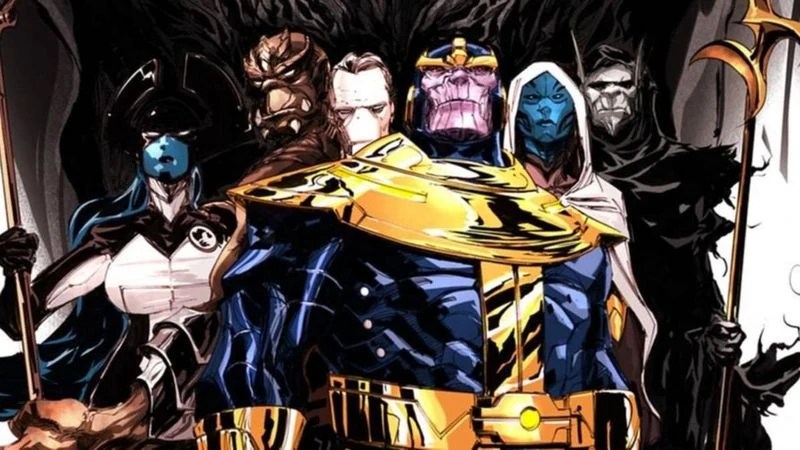
Also known as the Children of Thanos, the Black Order are a group of incredibly powerful warriors gathered together by Thanos to serve as his generals in his wars across the universe.
Now, are they technically a cult?
Probably not.
But as I said at the beginning, we’re being very liberal with the definition of “cult” here. And seriously, you try defining exactly where a cult ends and an organisation of fanatically devoted followers begins.
The Black Order willingly serve Thanos.
This isn’t some charismatic leader whose followers don’t know what he’s really planning. They know exactly what this guy is about.
He’s an insane, genocidal warlord obsessed with death, mass murder and imposing his will upon the universe.
And they looked at him and basically said:
“Yep. That’s our guy.”
There’s a lot more that could be said about the Black Order. We could talk about Corvus Glaive, Proxima Midnight, Ebony Maw, Black Dwarf and the rest of Thanos’ wonderfully dysfunctional collection of psychopaths.
But honestly, do we need to?
They willingly chose to serve an insane genocidal space warlord.
And that’s really all you need to know about them.
#8 – Los Illuminados – Resident Evil 4
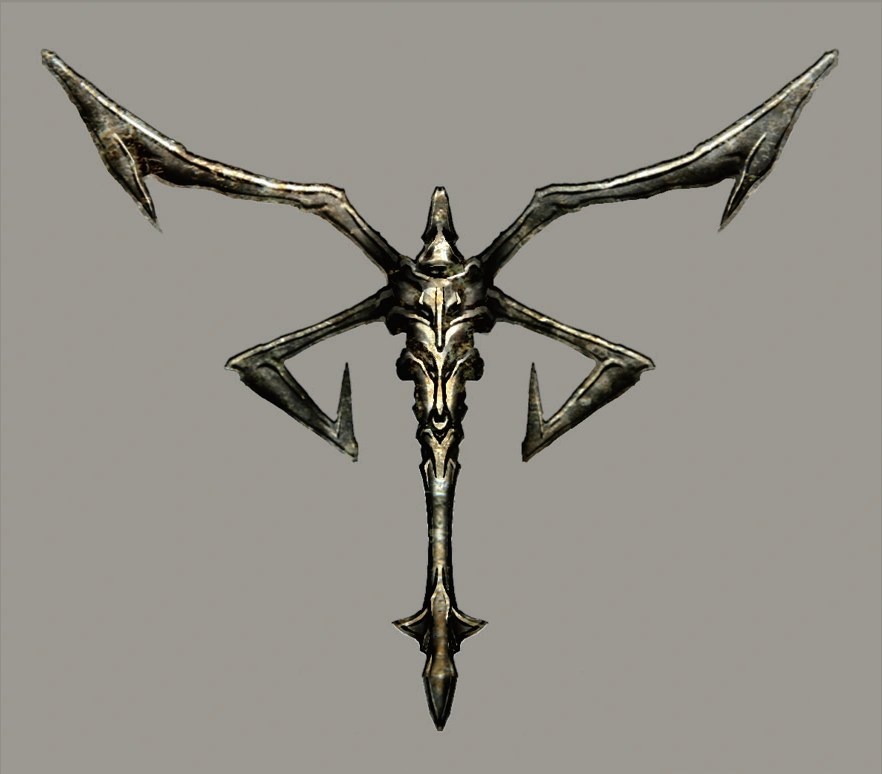
Next up, we’re heading to Spain for Los Illuminados, or The Enlightened Ones, from Resident Evil 4.
And unlike some of the entries on this list where I’m stretching the definition of “cult” until it begs for mercy, these guys are absolutely, unquestionably a cult.
Los Illuminados are an ancient religious group originating around the isolated region of Valdelobos, Spain. Their beliefs appear to have roots stretching back thousands of years, with evidence of ancient Plaga worship and human sacrifice found throughout the region.
Their religion would eventually incorporate elements resembling Roman Catholicism alongside some considerably less conventional practices.
You know…
Like deliberately infecting yourself with an ancient mind-controlling parasite.
At the centre of Los Illuminados’ beliefs are Las Plagas, parasitic organisms worshipped by the cult as holy creatures given to humanity by God. Becoming infected with a Plaga isn’t considered something horrifying to be avoided — it’s effectively part of joining the club.
By the events of Resident Evil 4, Los Illuminados is led by Osmund Saddler, who uses Las Plagas to control the people of Valdelobos and create an army of devoted followers.
But Saddler has considerably bigger ambitions than ruling over some creepy Spanish villages.
The cult kidnaps Ashley Graham, daughter of the President of the United States, with the intention of infecting her with Las Plagas and returning her home. From there, Saddler hopes to gain influence over the American government and eventually spread Los Illuminados’ control around the world.
Unfortunately for Saddler, he makes one tiny mistake.
He doesn’t account for Leon S. Kennedy being an absolute fucking menace.
Now, I’ll admit I’m slightly biased putting Resident Evil 4 on this list.
Ashley Graham’s body model in the Resident Evil 4 remake was Northern Irish cosplayer PeachMilky, and longtime Nerdgeist readers will know…
We love our home girl.

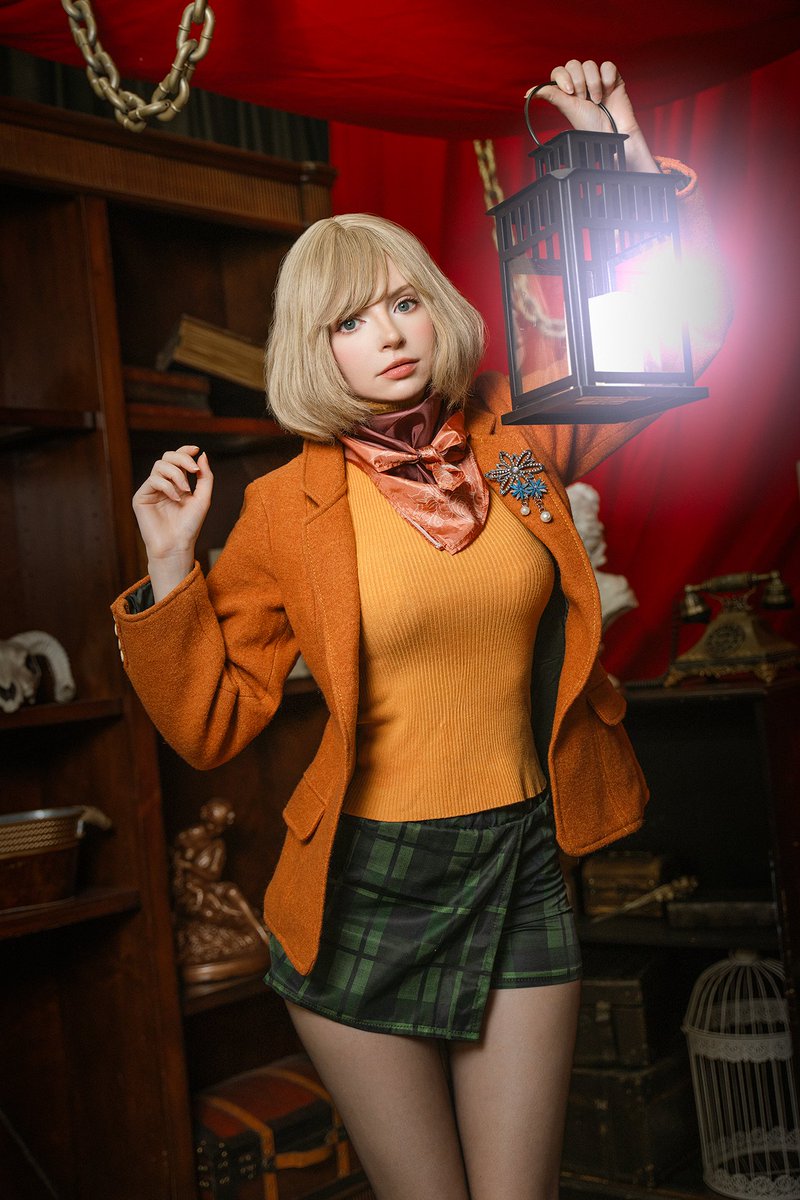


But even without my blatant Northern Irish bias, Los Illuminados deserve their place.
Ancient religion? Check.
Human sacrifice? Check.
Charismatic leader with plans for world domination? Check.
Ritualistically infecting your followers with mind-controlling parasites?
Yeah… number eight feels about right.
#7 – The Faceless Men – A Song of Ice and Fire
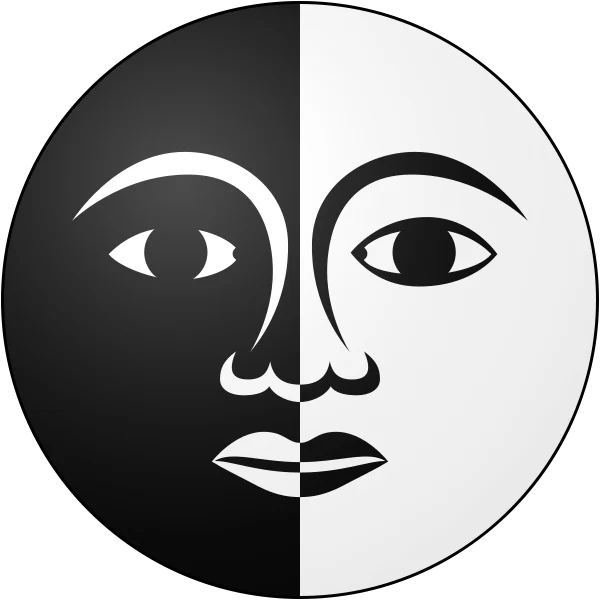
“Valar Dohaeris.”
All men must serve. Faceless Men most of all.
That’s the motto of the Faceless Men.
Viewers of Game of Thrones will probably remember them as the weird people who trained Arya Stark to become a face-swapping assassin.
But in the books, they’re so much more.
Based in the Free City of Braavos, although their members operate throughout both Essos and Westeros, the Faceless Men are essentially a religious order of assassins. They command exorbitant fees for their services, but their reputation for successfully killing their targets is unparalleled.
That’s because the Faceless Men don’t really see themselves as assassins.
They see themselves as servants of God.
Specifically, the Many-Faced God — a god of death whom they believe humanity already worships without realising it. Different cultures might give death different names and faces, but to the Faceless Men, they’re ultimately worshipping the same divine force.
And to understand where this particularly cheerful religion came from, we need to talk about Old Valyria.
Long before the events of A Song of Ice and Fire, the Valyrian Freehold dominated much of the known world through its dragonlords. House Targaryen descended from these people, but here’s something the television series doesn’t really communicate:
The Targaryens weren’t even one of the most powerful dragonlord families.
They were relatively minor players compared with some of the great families of Valyria.
And the empire those families created was absolutely fucking horrific.
Valyria’s incredible wealth was built in part upon huge numbers of slaves, including those forced to work in the brutal volcanic mines beneath the Fourteen Flames.
It was here that the Faceless Men were supposedly born.
According to their own history, an unknown slave heard the prayers of the people suffering around him. These slaves came from different cultures and prayed to different gods, but he realised that underneath all those different names they were essentially asking for the same thing.
Death.
He concluded that all these gods of death were actually different faces of a single deity: the Many-Faced God.
And he believed himself to be that god’s instrument.
So he granted one desperate slave what the Faceless Men would come to call “the gift” — death.
Later, he encountered another slave praying desperately for the death of his master. This time, he agreed to grant the man’s prayer on one condition:
The slave would join him in serving the Many-Faced God.
And from those beginnings came the Faceless Men.
But here’s where things get really interesting.
Eventually, the seemingly invincible Valyrian Freehold was annihilated during the mysterious Doom of Valyria, when the Fourteen Flames erupted in a catastrophic event that destroyed the heart of the empire.
Exactly what caused the Doom remains one of the great mysteries of A Song of Ice and Fire.
But there are theories that the Faceless Men may somehow have been involved.
And if that’s ever confirmed, then these weird face-stealing assassins Arya hangs around with didn’t merely kill a few important people.
They may have helped destroy the most powerful civilisation the world had ever seen.
#6 – The Neighbourhood Watch Alliance – Hot Fuzz
The concept of the “greater good” is primarily associated with utilitarian thinking: the idea that the most ethical course of action is the one that produces the greatest overall happiness or well-being.
Philosophers have spent centuries debating the relationship between collective welfare and individual rights.
Though I’m not entirely sure how many of them would feel about the Neighbourhood Watch Alliance in Hot Fuzz.
The greater good.
The N.W.A. was founded sometime around 1993 by Sandford Police Inspector Frank Butterman, following the suicide of his wife, Irene.
After Sandford lost its first Village of the Year competition, Irene became increasingly depressed and ultimately took her own life. Frank’s grief twisted into an obsession with making Sandford the perfect village and ensuring it would never lose again.
So he gathered together a group of like-minded residents and formed the Neighbourhood Watch Alliance.
Which sounds perfectly reasonable.
Except they started murdering people.
Anyone the N.W.A. believed threatened Sandford’s chances of winning Village of the Year could find themselves targeted. They disguised the killings as accidents or disappearances, before hiding the bodies beneath Sandford Castle.
By the events of Hot Fuzz, they’ve murdered at least eleven people.
And we’re not talking about people committing horrific crimes.
One man gets targeted largely because his house looks fucking awful.
This is what makes the N.W.A. such a wonderfully ridiculous cult.
They have secret meetings. They wear creepy robes. They chant together. They unquestioningly follow a charismatic leader. They murder anyone who threatens their worldview.
And most importantly, they’ve managed to convince themselves that everything they’re doing is justified because it serves…
THE GREATER GOOD.
The greater good.
This was such a completely wild plot twist when I first watched the film, and I absolutely loved it. Hot Fuzz spends so much time setting you up for one kind of conspiracy before revealing that the sinister organisation controlling Sandford isn’t interested in money, political power or world domination.
They just really, really want to win Village of the Year.
And apparently they’re willing to create a surprisingly large body count to do it.
For the greater good, of course.
#5 – The Church of the Survivor – Mistborn / The Cosmere
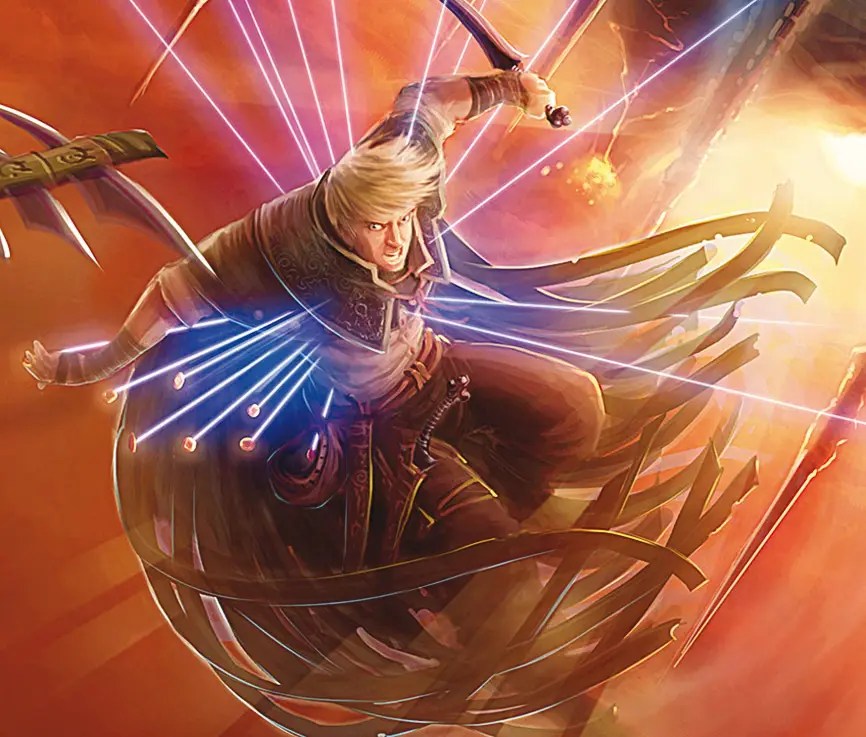
Now it’s time to fly off into Brandon Sanderson’s Cosmere.
I was tempted by the Cult of Moments, because they’re just wonderfully creepy, but how could I possibly miss out on the Church of the Survivor?
Before we continue:
MAJOR SPOILERS FOR MISTBORN AHEAD
Seriously. If you haven’t read the original Mistborn trilogy, go away, read it and then come back.
Still here?
Good.
If you’ve read Mistborn, there’s a good chance you’ll have some complicated feelings about Kelsier.
On one hand, he genuinely means well. He wants to overthrow the Final Empire, free the skaa from generations of oppression and destroy a ruling class that has treated an entire population as disposable.
On the other hand…
He’s kind of a serial killer.
He’s charismatic, manipulative, incredibly violent and possesses an ego large enough to have its own gravitational pull.
And Kelsier’s final masterstroke is absolutely incredible.
He turns himself into a messianic figure.
Thus was born the Church of the Survivor.
The religion is based around the exploits and teachings of Kelsier, the Survivor of Hathsin. But here’s where things get wonderfully complicated: some of the “miracles” associated with Kelsier weren’t actually miracles at all.
They were tricks.
Kelsier deliberately used Allomancy to create seemingly supernatural events as part of his plan to inspire the skaa and destabilise the Final Empire. Even after his death, a kandra was used to impersonate him, helping cement the idea that something supernatural had occurred.
Kelsier understood something incredibly important about revolution:
Killing the man at the top wasn’t enough.
People needed something to believe in.
And so when Kelsier allowed himself to become a martyr, the Survivor became something far larger than the man himself.
The Church spread particularly among the skaa, with people such as Demoux becoming devoted followers. Even Elend Venture would eventually join the Church, although his reasons were considerably more political.
Later, during the events in Urteau, the enormous cultural influence of Kelsier and his religion contributed to Spook becoming known as the Survivor of the Flames.
But perhaps the most fascinating part is that the religion survived.
Centuries later, the Church of the Survivor evolved into Survivorism, one of the major religions of Scadrial.
Kelsier became known as the Lord of the Mists, with believers teaching that he appears during misty nights to bless those who remain independent.
And despite all the mythology that grew around him, the central philosophy of Survivorism is wonderfully simple:
Survive.
Survive on your own terms.
Think for yourself.
Be independent.
Keep going.
Even the scars associated with Kelsier’s imprisonment in the Pits of Hathsin became religious symbols, with scars viewed as marks of devotion.
There’s something wonderfully ironic about a religion whose central commandment is essentially “survive” being built around a man who deliberately got himself killed.
But I genuinely love that idea.
For all Kelsier’s enormous faults — and there are many — the philosophy that survives him is ultimately about endurance, independence and refusing to allow powerful people to decide your worth.
Although I do wonder what Kelsier would make of the fact that members of Scadrial’s ruling classes eventually became followers of the religion created around him.
There’s something strangely familiar about that.
Religions and movements can change enormously after the deaths of their founders, sometimes becoming institutions embraced by the very kinds of powerful people they originally challenged.
It makes me wonder what some of the earliest Christians would make of certain wealthy and politically powerful modern evangelical movements.
And, more importantly…
What would Kelsier think of what his own church eventually became?
#4 – The Darkfriends – The Wheel of Time
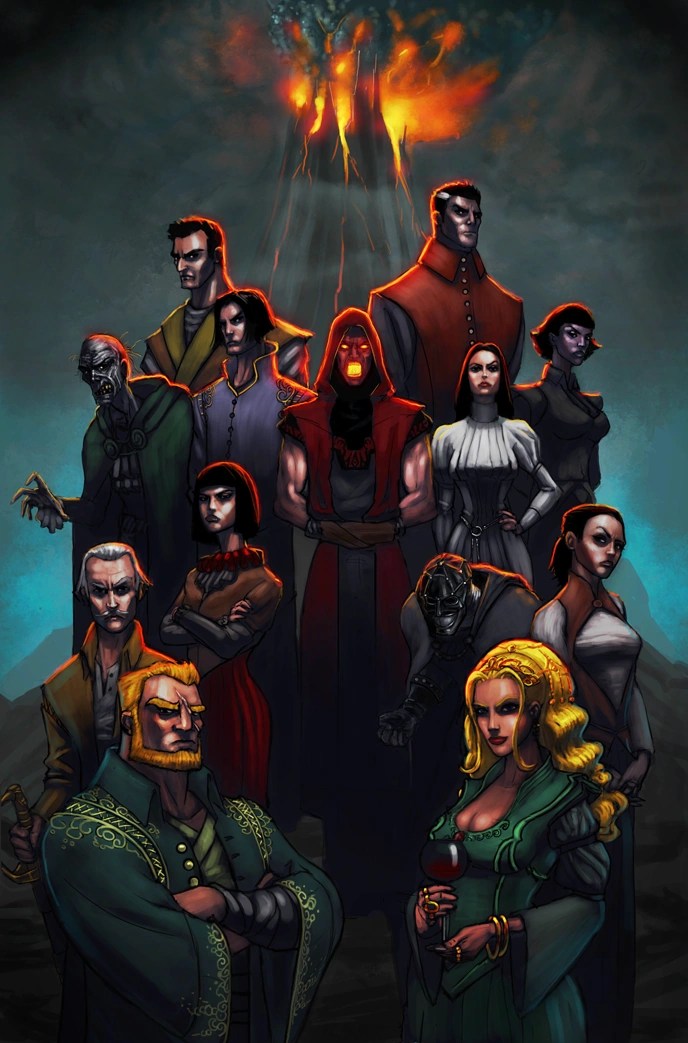
The Wheel of Time is an epic fantasy series by Robert Jordan, completed by Brandon Sanderson, set in a world where history endlessly repeats in a cycle known as the Wheel of Time.
The story begins with a group of young people from the quiet village of Emond’s Field, particularly Rand al’Thor, who discovers that he is the Dragon Reborn — the reincarnation of a legendary figure destined both to save the world and potentially destroy it.
Hunted by the forces of the Dark One, Rand and his friends are drawn into a vast conflict involving powerful magic users called Aes Sedai, warring nations, ancient prophecies, political intrigue and the approaching apocalyptic conflict known as Tarmon Gai’don, the Last Battle.
Across its 14 main novels, the series explores fate versus free will, power, friendship, trauma, leadership and whether people are condemned to repeat the mistakes of those who came before them.
When it came to cults in The Wheel of Time, two immediately crossed my mind: the deeply problematic Dragonsworn and the evil Darkfriends.
The Dragonsworn are fascinating examples of zealotry gone wrong, but the Darkfriends are just pure evil — and incredibly fun to read about.
Darkfriends are people who have secretly pledged their allegiance to the Shadow and the Dark One, often in pursuit of power, status or even immortality.
What makes them particularly frightening is that anyone can be a Darkfriend.
They don’t walk around wearing matching black robes announcing their allegiance to evil. Nobles, soldiers, merchants, ordinary villagers and even members of powerful organisations can secretly serve the Shadow.
That creates a wonderful sense of paranoia throughout the series. You can never be completely certain who can be trusted.
But perhaps the most cult-like aspect of the Darkfriends is what happens once they’ve joined. They’re promised power and rewards, only to discover that the organisation they’ve dedicated themselves to considers them completely disposable.
And they are some of the most evil and twisted people in The Wheel of Time, which is why, when everyone eventually gets their comeuppance, I feel absolutely zero pity.
And that isn’t always simply being defeated by the heroes. Sometimes they’re tortured, murdered or even eaten by their own allies.
But hey, when you submit yourself to the literal personification of evil, you really can’t be shocked when the employee benefits aren’t great.
#3 – The Foot Clan – Teenage Mutant Ninja Turtles
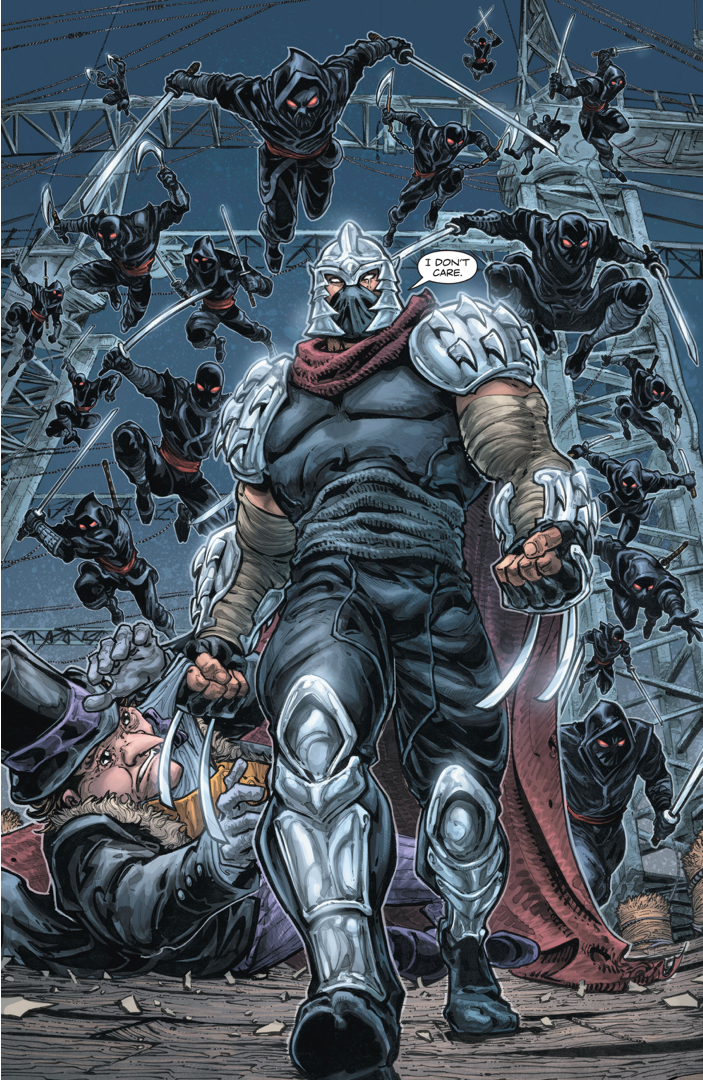
I mentioned the Hand earlier in this list, and you knew if the Hand made the discussion, eventually the Foot had to follow.
The Foot Clan originally began as a parody of Marvel’s Hand, but over the decades they have evolved into so much more.
Usually led by the devious Shredder, often alongside his second-in-command Karai, the Foot trace their origins back to feudal Japan and are traditionally associated with ninjutsu and, depending on the incarnation, even black magic.
Over the various Teenage Mutant Ninja Turtles continuities, they’ve evolved into a powerful global criminal organisation involved in everything from theft and assassination to smuggling, counterfeiting, hacking and terrorism.
But none of that compares to their greatest recruitment weapon:
Skateboards.
The original 1990 Teenage Mutant Ninja Turtles movie gives us perhaps the most wonderfully bizarre depiction of cult recruitment on this entire list.
The Foot deliberately target alienated teenagers. They give them somewhere to belong, surround them with other young people, and offer them arcade machines, skateboarding, martial arts, food, cigarettes and a sense of freedom from parents and authority.
Oh, and a very young Sam Rockwell.
Underneath all the wonderfully 1990s insanity, though, there’s actually something surprisingly dark happening.
Shredder is identifying vulnerable and disconnected young people, offering them community and belonging, and then gradually bringing them into a violent criminal organisation.
The Foot isn’t simply offering these kids something cool to do.
They’re offering them a family.
And that’s what makes this version of the Foot Clan such an effective fictional cult. Shredder doesn’t initially need to force these kids to follow him.
He gives them something they feel they’re missing — belonging, status and acceptance — and then uses that connection to control them.
#2 – The Nightsisters – Star Wars
I really was leaning towards the Knights of Ren here because, let’s face it, they looked badass.
But if I chose them, I’d probably have to spend the rest of my life looking over my shoulder for rabid Star Wars purists.
Then I started looking through the various Sith cults and dark side organisations, and there are a lot that I love.
Technically, you could even make the argument that the original Dark Jedi were something of a cult, while the Rule of Two created its own secretive tradition built around masters murdering their apprentices and apprentices eventually murdering their masters.
Healthy relationships all around.
But ultimately, it was hard to pick anyone other than the Nightsisters.
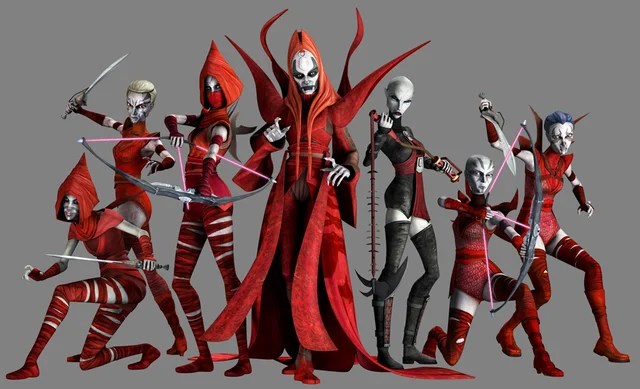
A bunch of pale-skinned women dressed in red, wielding dark magic…
Damn, I’m in love.
Also known as the Witches of Dathomir, the Nightsisters were an ancient clan of Force-sensitive witches who lived on the dark and incredibly dangerous world of Dathomir.
But what makes the Nightsisters so interesting is that their relationship with the Force looks completely different from the Jedi and Sith we’re accustomed to.
Rather than lightsabers, meditation and throwing Senate furniture at each other, the Nightsisters practised magick, drawing upon the mysterious ichor associated with Dathomir to perform supernatural feats.
And their abilities were wonderfully creepy.
Nightsister magick could be used to conjure weapons, manipulate or enhance living beings and even raise the dead.
Seriously, how were these women not going to make my list?
They also had a complicated relationship with Dathomir’s Nightbrothers, the male Zabraks who lived separately from the Nightsisters and were frequently treated as servants, warriors and potential mates.
And from among those Nightbrothers came one particularly famous Star Wars character:
Darth Maul.
Unfortunately, being an incredibly powerful society of dark-side witches eventually attracted the attention of people you really don’t want noticing you.
After Mother Talzin and the Nightsisters came into conflict with Count Dooku, General Grievous led a devastating Separatist assault against them, massacring much of the clan.
But the Nightsisters went down swinging.
They threw warriors, magick and even their own resurrected dead against Grievous’ forces in one of the darkest chapters of The Clone Wars.
And crucially, the Nightsisters weren’t completely wiped out. Their history and traditions continued to echo through Star Wars, with characters such as Merrin in the Jedi games carrying that legacy forward.
They’re creepy, powerful, visually fantastic and represent a completely different interpretation of the dark side from the endless Jedi-versus-Sith conflict.
They gave us undead armies, dark magick and Darth Maul.
Come on, what’s not to love?
#1 – The Cult of Tiamat – Dungeons & Dragons
And finally, we come to number one.
The cult that actually inspired this entire list.
The Cult of Tiamat.
In Dungeons & Dragons, there is a near-infinite number of churches, cults, gods, demons, devils and other suspiciously powerful entities all desperately competing for your eternal devotion.
So I think it says quite a lot that so many people look at all those options and decide:
“You know what? I’m going with the giant five-headed dragon.”
And honestly?
I understand.
Tiamat is magnificent.
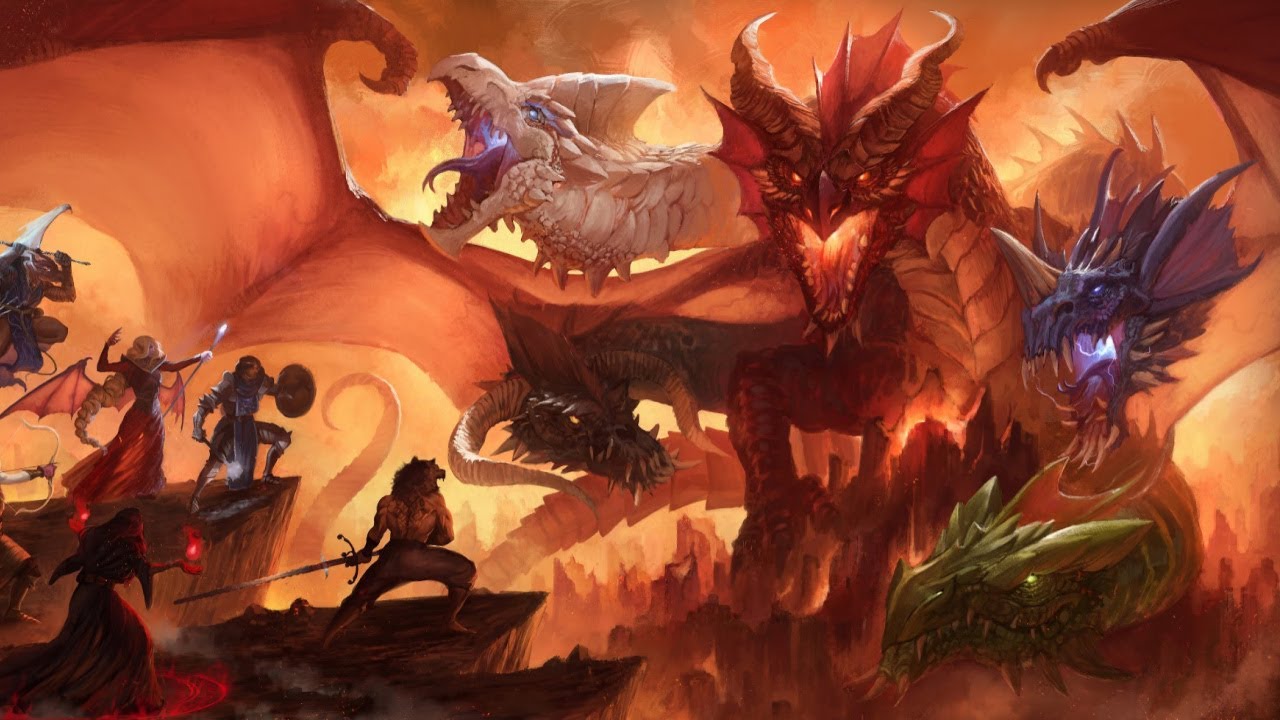
She is the five-headed Queen of Chromatic Dragons, one of the most iconic villains in the history of Dungeons & Dragons, and a being of almost unimaginable power.
Depending on the edition, setting and incarnation we’re talking about, the exact nature of Tiamat’s divinity gets complicated. But fundamentally, we’re dealing with a creature powerful enough to stand alongside gods, challenge gods and command the worship of mortals.
And if you want to know considerably more about how we ended up with a five-headed dragon goddess in the first place, I recently took a deep dive into the origins and history of Tiamat over on The Congruent Chronicler.
And Tiamat knows exactly how magnificent she is.
She doesn’t merely believe she’s powerful.
She believes she is better than you.
Better than me.
Better than humanity.
Better than virtually every pathetic little mortal creature crawling around the world beneath her.
And why wouldn’t she?
She’s an enormous dragon goddess with five fucking heads.
Each represents one of the major chromatic dragons — red, blue, green, black and white — giving her a terrifying combination of power, intelligence and destructive potential.
But we’re not actually here to talk about Tiamat.
We’re here to talk about the people who looked at that and decided to worship her.
The Cult of Tiamat
Tiamat’s followers aren’t simply a collection of lunatics hiding in caves chanting around dragon statues.
Although, to be fair, there is probably quite a lot of that too.
Her worshippers can be organised, ambitious and frighteningly effective. Cultists dedicated to Tiamat have worked to infiltrate other organisations, undermine rival faiths and spread their Queen’s influence throughout the mortal world.
And ultimately, their goal is remarkably simple.
Tiamat will rule.
Because from their perspective, the world doesn’t belong to humanity.
It doesn’t belong to elves, dwarves, halflings or any of the other mortal races who have divided it between themselves.
It belongs to dragons.
And above all dragons stands their Queen.
The Cult’s dream is a world in which Tiamat triumphs, chromatic dragons dominate and the mortal races finally understand their proper place:
servants beneath the dragons.
Which brings us back to something I find fascinating about fictional cults.
Because whether we’re talking about the Church of Blood, Los Illuminados, the Faceless Men, Darkfriends or the Cult of Tiamat, eventually you have to ask:
Why would anyone join these people?
Why surrender your freedom to something that openly considers you inferior?
Why devote yourself to a creature that ultimately wants to rule you?
Why follow a tyrant?
And that’s actually the question that started this entire article.
It’s also the question I explore in Part Two of my Tiamat series, where I look at the psychology of Tiamat and her followers, why people are attracted to tyrannical figures, and what a fictional dragon cult can potentially tell us about very real human behaviour.
Because Tiamat might be fictional.
Five-headed dragons might be fictional.
But the psychology that makes people follow powerful, authoritarian figures?
That’s very real.
And that’s why the Cult of Tiamat takes my number one spot.
Categories: Nerd Bites


